 Deals Radar
Both AC types are widely available on Amazon India, the right choice depends on your specific living situation.
- Window ACs cost less upfront (typically ₹22,000–₹35,000 for 1.5 ton) and are easier to install, ideal for renters and small rooms up to 150 sq ft.
- Split ACs are significantly quieter, more energy-efficient over time, and better for rooms above 150 sq ft, but cost ₹28,000–₹55,000+ and require professional installation.
- A 5-star inverter split AC can consume 20–30% less electricity than a comparable window AC, which adds up substantially across a full Indian summer.
- If you use AC more than 6–8 hours daily, the long-term electricity savings of a split AC typically outweigh the higher upfront cost within 1–2 seasons.
If you're shopping for an AC in India in 2026, the first and most fundamental question is whether to go with a window AC or a split AC. This guide breaks down the real differences across price, energy costs, noise, installation complexity, and suitable room sizes, so you can make a decision based on your actual living situation, not just a spec sheet comparison.
How They Are Structurally Different
The design difference between the two types explains almost every other difference on this list. A window AC is a single, self-contained unit, the compressor, condenser, and evaporator all sit inside one box mounted in a window frame or a dedicated wall cut-out. Everything that makes noise and generates heat stays inside your room.
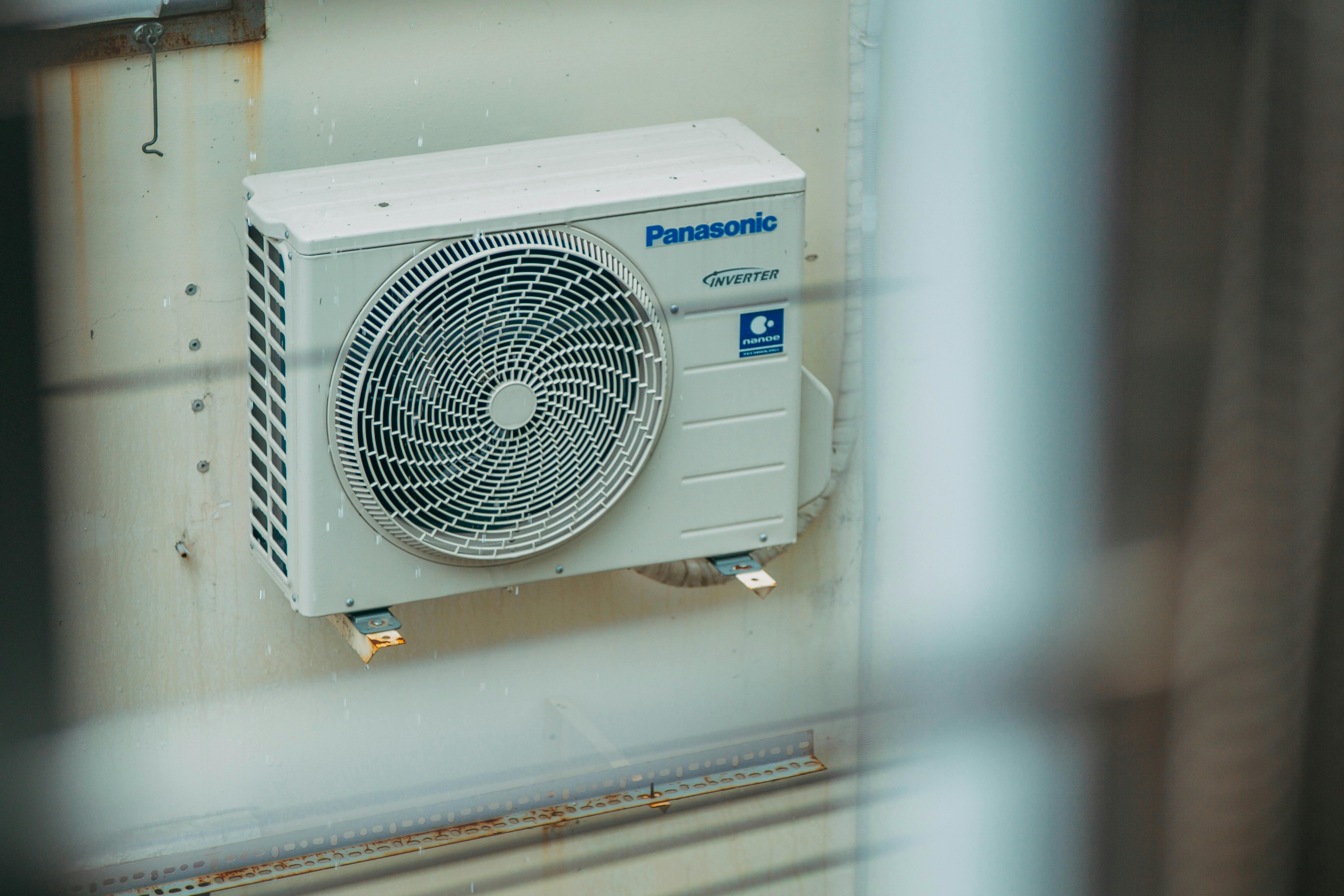
A split AC separates these functions across two units. The indoor unit, mounted high on a wall, handles air delivery. The outdoor unit, placed outside the building, houses the compressor and condenser, the noisy, heat-generating components. They're connected by refrigerant pipes routed through a small hole in the wall.
This structural distinction directly impacts noise levels, installation complexity, aesthetic appeal, and energy efficiency, all of which are covered below.
Price and Installation Cost Comparison
Window ACs have a clear upfront cost advantage. For a standard 1.5 ton unit, window AC prices on Amazon India in 2026 typically range from around ₹22,000 to ₹35,000 for reputable brands, depending on star rating. Installation is simpler, if a suitable window frame or wall opening already exists, a local electrician or brand technician can set it up quickly, often without the kind of wall drilling and pipe-routing that a split AC demands.
Split ACs in the same 1.5 ton category start closer to ₹28,000 for 3-star models and go up to ₹55,000 or more for 5-star inverter units from premium brands. On top of the unit price, professional installation typically adds ₹1,500–₹3,500 for labour, with extra charges if additional copper piping, wall drilling, or a stabilizer is needed.
| Factor | Window AC | Split AC |
|---|---|---|
| 1.5 Ton Unit Price (approx.) | ₹22,000 – ₹35,000 | ₹28,000 – ₹55,000+ |
| Installation Cost | ₹500 – ₹1,500 | ₹1,500 – ₹3,500+ |
| Suitable for Renters? | Yes (portable, minimal wall work) | Usually not ideal |
| Shifting Cost (if moving) | Low | ₹2,500 – ₹5,000 |
One key note for renters: window ACs are significantly more practical. They require minimal structural changes to the property, can be moved when you shift houses, and don't require wall drilling for refrigerant pipes. Split ACs involve more permanent installation work that landlords may not permit.
Energy Efficiency and Electricity Bills
This is where split ACs pull ahead considerably for heavy users. A 1.5 ton split AC with 5-star inverter rating typically consumes around 1.2–1.5 kWh per hour of use. A comparable window AC in the same star category tends to consume 1.6–2.0 kWh per hour, because all components, including the compressor, are housed in one unit with less thermal separation and less efficient heat exchange.
Inverter technology (which adjusts compressor speed rather than running it at full blast continuously) is more widely available and better implemented in split ACs. For someone running an AC 8 hours a day across a 6-month Indian summer, the difference in electricity bills between a 5-star split AC and a 3-star window AC can be substantial, often ₹5,000–₹12,000 across a season, depending on your local electricity tariff and usage pattern.
| Factor | Window AC | Split AC |
|---|---|---|
| Avg. Power Consumption (1.5T) | 1.6 – 2.0 kWh/hr | 1.2 – 1.5 kWh/hr |
| Inverter Technology Availability | Limited models | Widely available |
| 5-Star Models Available? | Yes, fewer options | Yes, wide range |
| Est. Monthly Savings (split vs window) | , | ₹800 – ₹1,500 approx. |
Noise, Comfort, and Cooling Performance
Noise is one of the sharpest differences between the two types, and it matters a great deal for bedrooms and home offices. Because a window AC keeps the compressor inside the room, it produces noticeably more noise, typically around 50–60 dB at moderate load. Split ACs route the compressor outdoors, so the indoor unit runs at 30–40 dB, which is closer to a soft ambient hum. Research suggests split ACs are roughly 15–25 dB quieter indoors, which translates to a substantially quieter environment during sleeping hours.
On cooling performance, both types can cool a room effectively when properly sized for the space. Split ACs generally offer more uniform air distribution because the indoor unit is mounted high and throws air across a wider angle. Window ACs tend to cool the area directly in front of the unit faster but may leave corners of larger rooms warmer. For rooms above 150 sq ft, a split AC is generally recommended for more even coverage.
Which One Should You Actually Buy?
The right answer depends on your specific situation more than any single spec. Here's a straightforward breakdown of who each type suits best.
Go with a Window AC if: You're renting and likely to move within 2–3 years. Your room is small (under 150 sq ft). You need the lower upfront cost. Your building has a suitable window or wall opening already. You're cooling a guest room, small office cabin, or shop space where noise isn't a priority.
Go with a Split AC if: You own the property or are staying long-term. Your room is a bedroom where sleep quality matters. Your room is above 150 sq ft or has poor insulation. You use AC more than 6 hours daily (the electricity savings pay back the higher cost). You care about aesthetics, split ACs don't block your window view.
Recommended Models to Check on Amazon India (2026)
For window ACs, the Voltas 183 Vectra Pearl 1.5 Ton 3 Star and the Blue Star WIE518L 1.5 Ton 5 Star Inverter Window AC are well-regarded options with copper condensers and reliable after-sales service. For split ACs, the LG 6-in-1 Convertible 1.5 Ton 5 Star Dual Inverter Split AC and the Voltas 185V Vectra Elite 4-in-1 Convertible 1.5 Ton 5 Star Inverter Split AC are among the most recommended for value and efficiency in 2026. You can also check our guide to the best ACs under ₹35,000 in India for budget-specific picks across both types.
Frequently asked questions
Which is better for a rented house, window AC or split AC?
For a rented house, a window AC is generally more practical. It requires minimal structural changes to the property, making it easier to get landlord approval and move the unit when you shift. Split ACs involve wall drilling for refrigerant pipes and are more complex to uninstall, which can be a problem in rented spaces. That said, if your rental allows it and you plan to stay for several years, the lower running costs of a 5-star split AC may still make it worthwhile.
Does a split AC really save electricity compared to a window AC?
Yes, in most cases. A 1.5 ton split AC with inverter technology typically consumes around 1.2–1.5 kWh per hour, while a comparable window AC uses around 1.6–2.0 kWh per hour. For someone using AC 8 hours a day, this difference can amount to ₹800–₹1,500 in monthly electricity savings, depending on your local tariff. Over a full summer, that adds up quickly. A 5-star rated window AC narrows this gap somewhat, but split ACs still hold an efficiency advantage due to their separated compressor design.
What room size is a 1.5 ton AC suitable for?
A 1.5 ton AC is typically suited for rooms between 120 and 180 sq ft. For smaller rooms under 100–110 sq ft, a 1 ton AC is usually sufficient. For larger rooms above 200 sq ft or spaces with high ceilings and poor insulation, a 2 ton AC is recommended. Choosing the wrong tonnage for your room size leads to either inefficient cooling or unnecessarily high electricity bills.
Is window AC installation easier than split AC?
Yes, significantly so. A window AC can usually be installed in a few hours by a local electrician if a suitable window frame or wall opening is available, and typically costs ₹500–₹1,500 for labour. Split AC installation involves wall drilling, refrigerant pipe routing, mounting both indoor and outdoor units, and gas charging, a process that takes 2–4 hours and typically costs ₹1,500–₹3,500, with potential additional charges for longer piping runs or extra accessories.
Which AC brand is most reliable in India, Voltas, LG, or Blue Star?
All three are reliable brands with strong after-sales networks in India. Voltas, backed by Tata, offers broad service coverage across India including smaller cities and towns, making it a strong choice if service accessibility is a concern. LG is widely regarded for energy efficiency, smart features, and long-term compressor durability. Blue Star is particularly well-regarded for commercial and semi-commercial use, but its residential range is also solid. The choice between them often comes down to specific model features, the star rating you need, and your city's service availability for each brand.
Can I convert a window AC to a split AC later?
No. The two types have fundamentally different designs and components. A window AC cannot be converted into a split AC. If you start with a window AC and later decide to upgrade to a split AC, you'll need to purchase a new unit entirely. This is worth factoring into your decision if you're considering the window AC as a temporary solution before investing in a split AC long-term.